
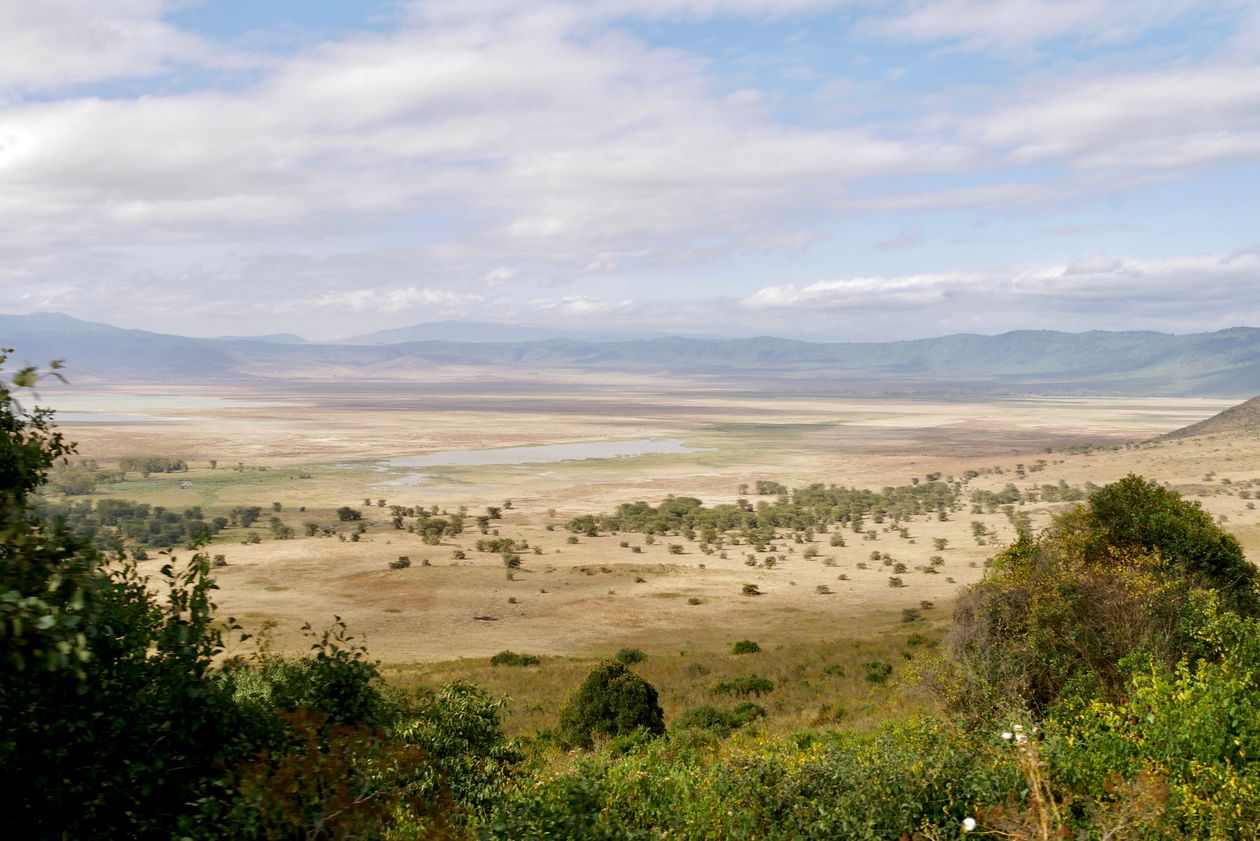
This Ngorongoro Crater safari guide covers everything you need to plan a visit to one of East Africa's most wildlife-dense destinations: a 304-square-kilometer volcanic floor that holds roughly 25,000 large mammals, including all of the Big Five. The crater sits within the Ngorongoro Conservation Area (NCA), about 190 km west of Arusha, and most visitors spend one full day on the floor as part of a northern Tanzania circuit. Entrance costs around $70 per adult, a crater service fee of $295 per vehicle applies on each descent, and a licensed guide is required. The dry season from June through October gives the clearest conditions, though the crater's permanent water sources make it rewarding year-round.
Wildlife in the Ngorongoro Crater
The Ngorongoro Crater is the only place in Tanzania where you have a realistic chance of seeing all of the Big Five in a single day. The crater's enclosed ecosystem keeps large mammals on the floor year-round, producing a density of roughly 25,000 animals across 304 km². Compare that to the Serengeti at nearly 15,000 km² and you get a sense of how concentrated wildlife here can be.
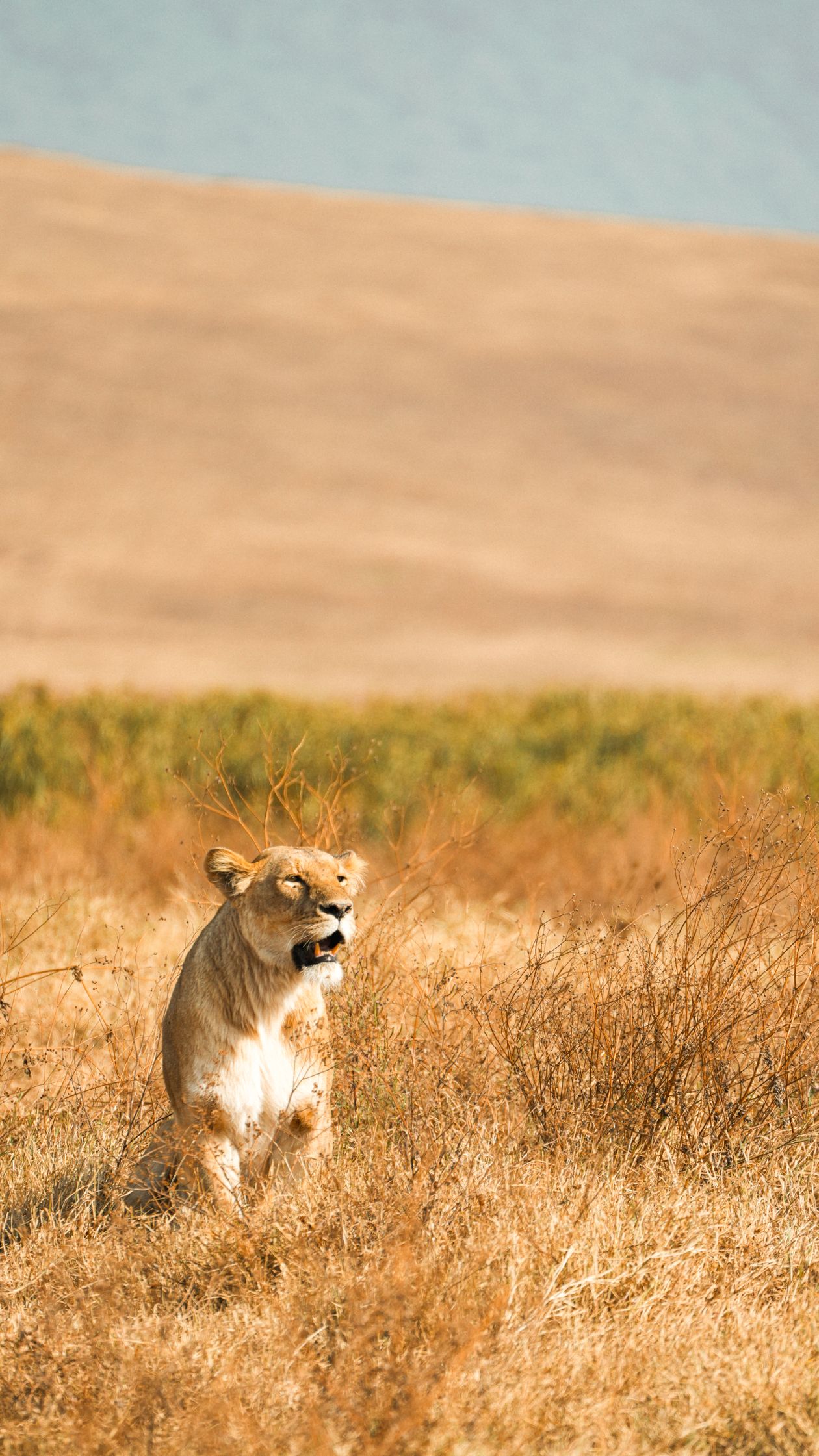
Lions are the most reliably spotted of the Big Five, with 60 to 70 individuals across multiple prides on the crater floor. They are often found resting in open grassland or in the shade of acacias near waterholes during midday. The males in the crater are known for their especially full, dark manes, a trait linked to the isolated gene pool.
Black rhinos are the standout reason many safari travelers include the crater on their itinerary. Fewer than 30 black rhinos remain on the crater floor, yet sightings are relatively common here, making it the best place in Tanzania to find this critically endangered animal. In the Serengeti, black rhinos are functionally absent; in Ngorongoro, your guide checks radio updates from other vehicles and can often direct you to one. The rhinos are usually seen in the open on the southern and western sides of the crater, most active at dawn and dusk.
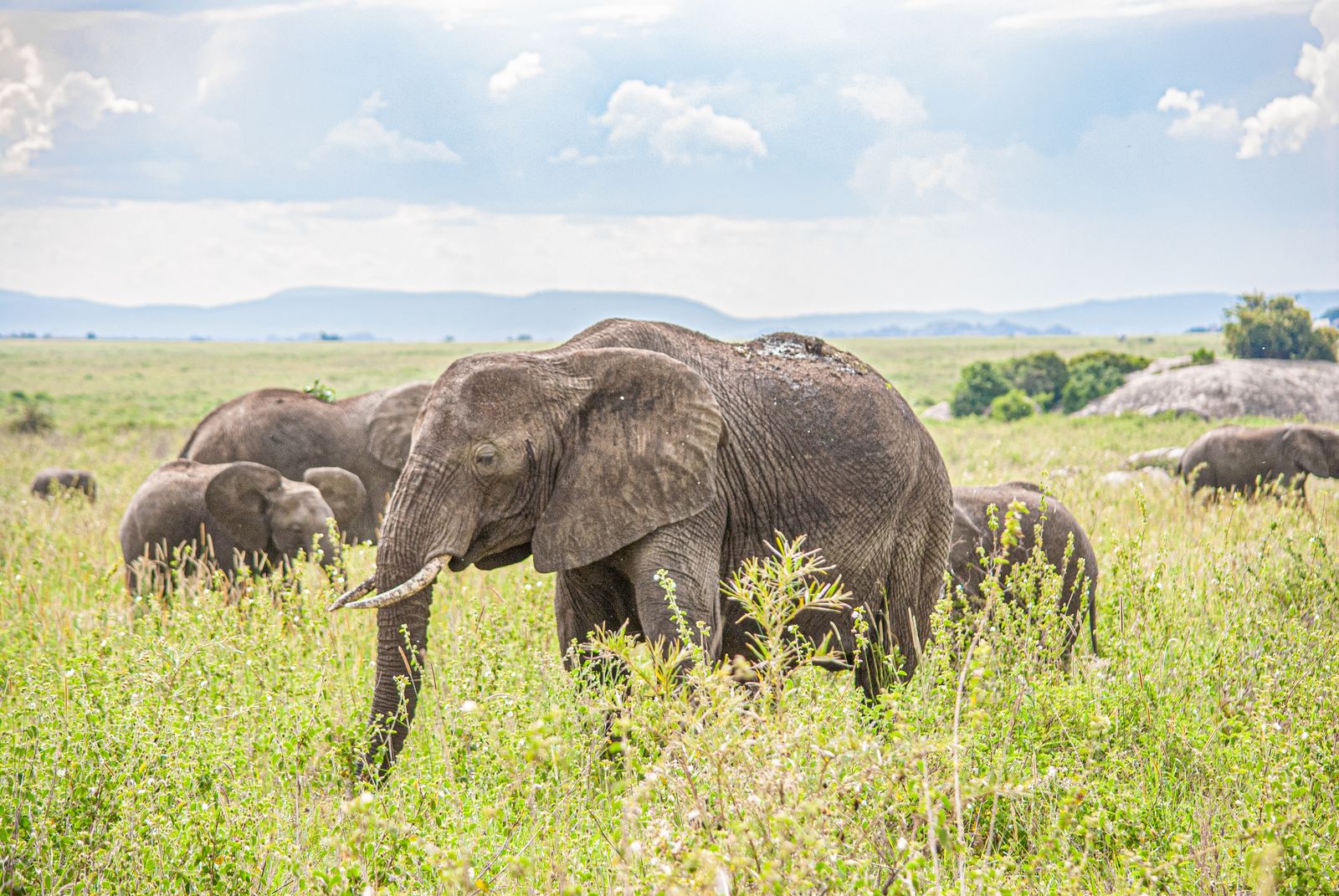
Elephants on the crater floor are mostly solitary bulls, many with notably large tusks. Family herds with calves tend to stay on the forested rim rather than the floor. Around 300 elephants use the broader NCA, and the bulls you encounter on the floor are habitually calm around vehicles.
Buffalo are the most numerous of the Big Five here, with over 4,000 living in the area. Large herds graze near Ngoitokitok Springs and Mandusi Swamp, and solitary old bulls wander across most of the crater floor throughout the day.
Leopards are present but harder to find than the other four. They tend to use the forested crater slopes rather than the open grassland floor, and morning is your best window. A crater-floor leopard sighting is a genuine bonus, not something to rely on.
One notable animal you will not see on the crater floor is the giraffe. The crater walls drop roughly 600 meters and the descent is too steep for giraffes to navigate safely. The floor ecosystem also doesn't support the tall acacia browsing they depend on, so giraffes never established themselves inside. Beyond the Big Five, the crater supports spotted hyenas in unusually high numbers (predator density here is exceptional), hippos in Mandusi Swamp, large herds of zebra and wildebeest, and over 500 bird species including flamingos on Lake Magadi in the south.
Ngorongoro Crater Fees in 2026
A Ngorongoro Crater visit involves two main fees beyond your safari package: the NCA entrance fee per person per day, and a crater service fee per vehicle per descent. As of 2026, entrance costs approximately $70 per adult non-resident (children 5 to 15 pay around $24; under 5 are free), and the crater service fee is $295 per vehicle. For a couple sharing a private safari vehicle, that works out to roughly $435 in park fees for a single crater day before accommodation, transport, or guide costs are added.
Most safari operators bundle these fees into their per-person day rate, so you may not see them itemized. Worth asking your operator to break it out so you know what you're paying for. A few things to understand about how the fees work: the NCA entrance fee covers the full conservation area, not just the crater. If your itinerary includes Olduvai Gorge or a rim walk, those are on the same day pass. The crater service fee, however, is specific to each descent and is charged again if your tour includes two crater days. These figures come from multiple current operator sources citing NCAA tariffs; fees do change, so confirm with your operator or check the NCAA website before booking.
Best Time to Visit the Ngorongoro Crater
The dry season from June through October is the best time to visit the Ngorongoro Crater. Short grass during this period makes predators much easier to spot, and animals concentrate around the springs and swamps that hold permanent water. July and August are peak months: clear skies, optimal wildlife viewing, but also the highest accommodation prices and the most vehicles on the crater floor at once.
What makes the crater different from the Serengeti in terms of timing is that the floor has permanent water year-round. Wildlife doesn't migrate away in the dry season the way it does on the open plains, which means the crater delivers solid viewing in every month. The green season from November through May brings lush vegetation, excellent birdwatching, and migrant bird species from November onward. April and May (the long rains) can make the descent roads muddy and limit where vehicles can go on the floor, but they also bring far fewer visitors and lower accommodation rates. For a wider view of how seasonal timing works across the whole northern circuit, see our month-by-month Tanzania safari timing guide.
The shoulder months of June and October are often the best overall choice: dry-season wildlife visibility without peak-season crowd levels. October in particular pairs well with a Serengeti visit, as the short dry grass persists and most other tourists are gone. For more on how the two parks compare across seasons, our Serengeti vs Ngorongoro Crater guide covers the tradeoffs in detail.
How to Get to the Crater and What to Expect on the Day
The Ngorongoro Crater is about 190 km west of Arusha, a drive of 3 to 4 hours in a 4WD safari vehicle depending on road conditions and stops. The route passes through the foothills below Lake Manyara and climbs to the crater rim via Karatu. Domestic flights to a small airstrip near the rim are available through several carriers and cut travel time significantly, though at a higher cost.
The descent. All vehicles enter the crater through the Seneto Descent Gate on the western rim and exit through the Lemala Ascent Gate on the eastern rim. The system is one-way only. Both roads are unpaved and steep, with the descent taking around 20 to 30 minutes each way. Wildlife is often visible on the forested slopes during the drive down. The gates open at 6 AM; no new vehicles may enter after 4 PM, and all must be out of the crater by 6 PM. Arriving at the Seneto gate at or close to 6 AM is a real advantage: you get the crater to yourself for the best hour of light, and predators are most active before 9 AM.
On the floor. Visitors stay in their vehicle throughout the crater drive except at a handful of designated stopping areas: the picnic sites near Ngoitokitok Springs, the springs viewpoint area, and the gate zones. Walks on the crater floor are not permitted. A full-day visit typically runs 6 to 8 hours on the floor, enough time to cover the main wildlife circuits and spend real time watching predators and searching for rhinos. Your guide communicates with other drivers via radio and will redirect you toward active sightings. When thinking about how the crater fits into a broader Tanzania trip, our guide on how many days to budget for a Tanzania safari covers how to allocate nights across the northern parks.
Where to Stay Near the Ngorongoro Crater
There is no accommodation on the crater floor; all lodges and camps are on the rim or in the surrounding area. Where you base yourself matters most because of timing: the earlier you can begin your descent, the better your wildlife viewing conditions, and that means staying as close to the Seneto gate as possible.
Crater rim lodges are the premium option and the most practical for early starts. Properties like Lemala Ngorongoro (12 canvas tents in acacia forest on the eastern rim), Ngorongoro Serena Lodge (closest to the Seneto descent route), and The Highlands Camp (stilted canvas suites with wide crater views) put you within minutes of the gate. Rim accommodation sits at around 2,300 meters elevation, so mornings often drop to 8 to 12°C. These lodges typically run from $400 to well over $900 per person per night in peak season, and the most sought-after properties book up 6 to 12 months in advance for July and August.
Simba Campsite on the rim is the accessible budget option: a public site with basic shared facilities at under $100 per person per night, giving you the same rim location and early-start advantage as the lodges. Cold nights are part of the deal, so bring a proper sleeping bag.
Karatu area lodges offer the best value for budget and mid-range travelers. Karatu is a town about 20 to 30 minutes from the NCA gate, with a range of guesthouses, boutique lodges, and highland retreats at a fraction of rim prices. You add some drive time to your morning, but Karatu also works well as a base for Lake Manyara and has more dining options. To help work out whether your nights are better spent on the crater rim or in the Serengeti, our Tanzania safari packing list has practical planning tips alongside the gear breakdown.
Tips for Your Ngorongoro Crater Visit
A few practical decisions make a real difference to how much you get out of the crater.
Start at 6 AM. The Seneto gate opens at 6 AM and the first vehicles down get the crater largely to themselves for the best hour of light. Predators are considerably more active before 9 AM. By late morning, day-trippers from lodges further afield begin arriving, and vehicle density around popular sightings increases.
Dress in layers. The rim sits at around 2,300 meters and mornings can be genuinely cold, even in July. The crater floor is warmer but still cool in the early hours, climbing to around 28 to 30°C by midday. Pack layers you can add and remove throughout the day. For a full breakdown of what to bring on a northern circuit trip including gear that handles both cold crater mornings and hot Serengeti afternoons, see our Tanzania safari packing list.
Make black rhino a stated priority. Tell your guide at the start of the day that black rhino is your main sighting goal. Guides share locations via radio and can often direct you to one before it moves off. With fewer than 30 individuals on the floor, take real time to observe rather than moving on quickly.
Arrange lunch in advance. Most rim lodges and camps prepare packed lunches for crater days. Eating at the picnic area near Ngoitokitok Springs while hippos wallow in the water nearby is one of the understated pleasures of a crater visit. Large kites patrol the picnic area and will take food from your hands, so hold on to your plate.
Build in time for Olduvai Gorge. Olduvai Gorge is about 45 km from the crater rim and is where researchers found some of the most significant early human fossils and stone tools on record, dating back nearly two million years. It's a 1 to 2 hour side trip that is well worth including if your itinerary allows an extra half day in the area.
Plan two nights in the area if you can. One night gets you a single crater day. Two nights lets you return to the crater, or use the second day for Olduvai Gorge and an Empakaai Crater rim walk. The Ngorongoro Conservation Area has more to offer than the main crater, and a second night opens most of it up.
Frequently Asked Questions About the Ngorongoro Crater
Here are the questions most visitors ask before planning a Ngorongoro Crater safari.
Can you see all of the Big Five in the Ngorongoro Crater?
Yes. Lions, leopards, elephants, buffalo, and black rhinos are all present on the crater floor or its forested slopes. Leopards are the most elusive, preferring the rim slopes over the open grassland, so a crater-floor sighting is not guaranteed. Black rhinos are present in small numbers (fewer than 30 on the floor) but are seen regularly, making this the most reliable place in Tanzania to find one.
Why are there no giraffes in the Ngorongoro Crater?
The crater walls drop roughly 600 meters and the descent is too steep for giraffes to navigate safely. The crater floor also doesn't support the tall acacia browsing giraffes depend on in the way the surrounding savanna does. As a result, they never established a population inside the crater. You will see plenty of giraffes on the drive from Arusha and in Tarangire National Park, but not on the crater floor.
How long do you spend on the Ngorongoro Crater floor?
Most full-day crater visits run 6 to 8 hours on the floor. Gates open at 6 AM and no new vehicles may enter after 4 PM, with all vehicles required to exit by 6 PM. A shorter half-day visit of 3 to 4 hours is possible for tighter itineraries, though a full day gives you the best chance of finding all of the Big Five and spending proper time at key spots like Ngoitokitok Springs.
Do I need a guide to visit the Ngorongoro Crater?
Yes. All visitors to the Ngorongoro Conservation Area must be accompanied by a licensed guide in a registered safari vehicle. Self-drive access is not permitted on the crater floor. The guide requirement is as practical as it is regulatory: guides share wildlife locations via radio, which is especially valuable for tracking rhinos and predators across the floor.
Is staying on the crater rim worth the price?
For most visitors, yes. Rim accommodation puts you at the Seneto gate at first light, when wildlife is most active and the floor has the fewest vehicles. The views across the crater at sunrise and sunset from the rim are also genuinely striking and different from anything you get on the floor. Budget travelers can get the same early-start advantage from Simba Campsite on the rim. Karatu-based lodges are a strong alternative for those who want to spend less, with only a slightly longer transfer to the gate each morning.
How far in advance should I book a Ngorongoro Crater safari?
Crater rim lodges in peak season (July and August) book up 6 to 12 months ahead. Safari packages with operators can usually be arranged with 2 to 3 months notice outside peak periods, but if you want a specific rim property during the dry season, book as early as possible. The crater itself doesn't have a strict visitor quota the way some limited-permit experiences do, but accommodation availability is usually the binding constraint in July and August.