
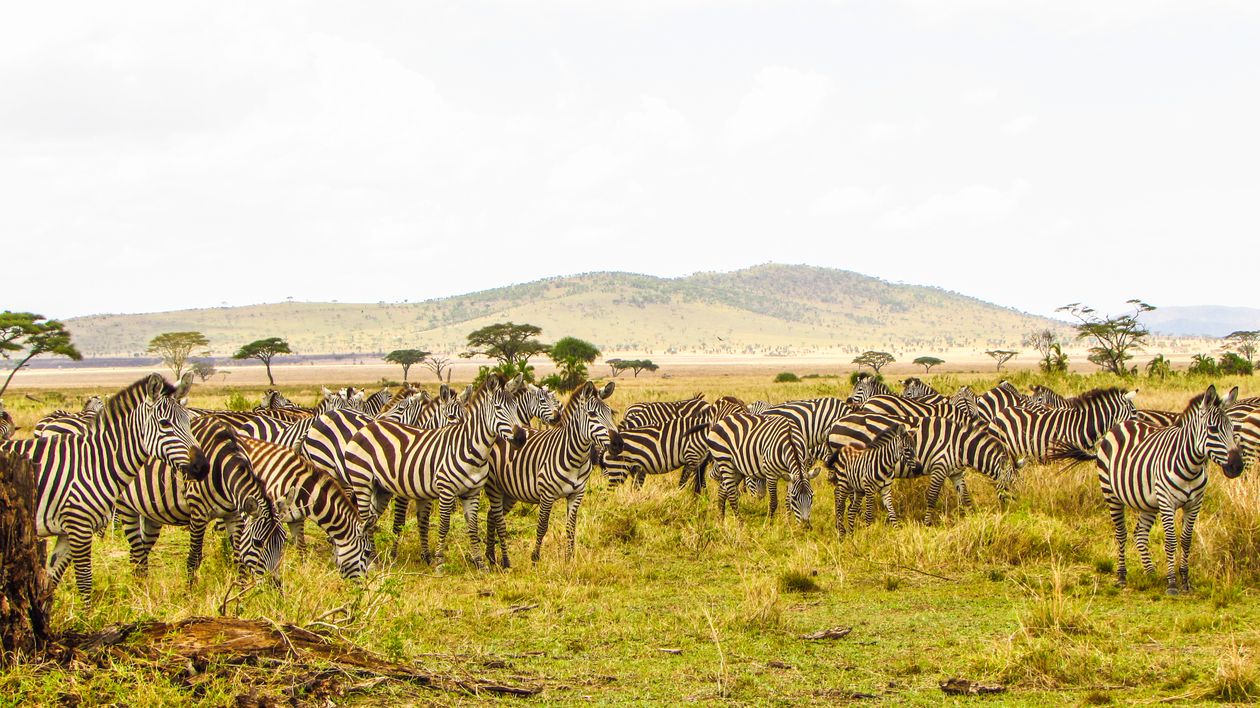
The Great Migration is the largest overland wildlife movement on Earth: around 1.5 million wildebeest, 400,000 zebra, and 200,000 Thomson's gazelle moving in a continuous clockwise loop through Tanzania's Serengeti and into Kenya's Masai Mara. It runs year-round with no single start date or finish line. The famous Mara River crossings happen between July and October, with August delivering the most concentrated drama. Calving season in the southern Serengeti from January through March is equally extraordinary, and every month of the year offers genuine wildlife action worth planning around.
What Is the Great Migration?
The Great Migration is not a single event you can watch from a grandstand. It is a continuous, year-round loop driven entirely by rainfall and the grass that comes with it. As the rains fall and fresh pasture grows, the herds follow, looping clockwise through the greater Serengeti-Mara ecosystem across roughly 800 kilometers of savanna, woodland, and river. Nine months of the cycle take place inside Tanzania's borders; three months in Kenya's Masai Mara.
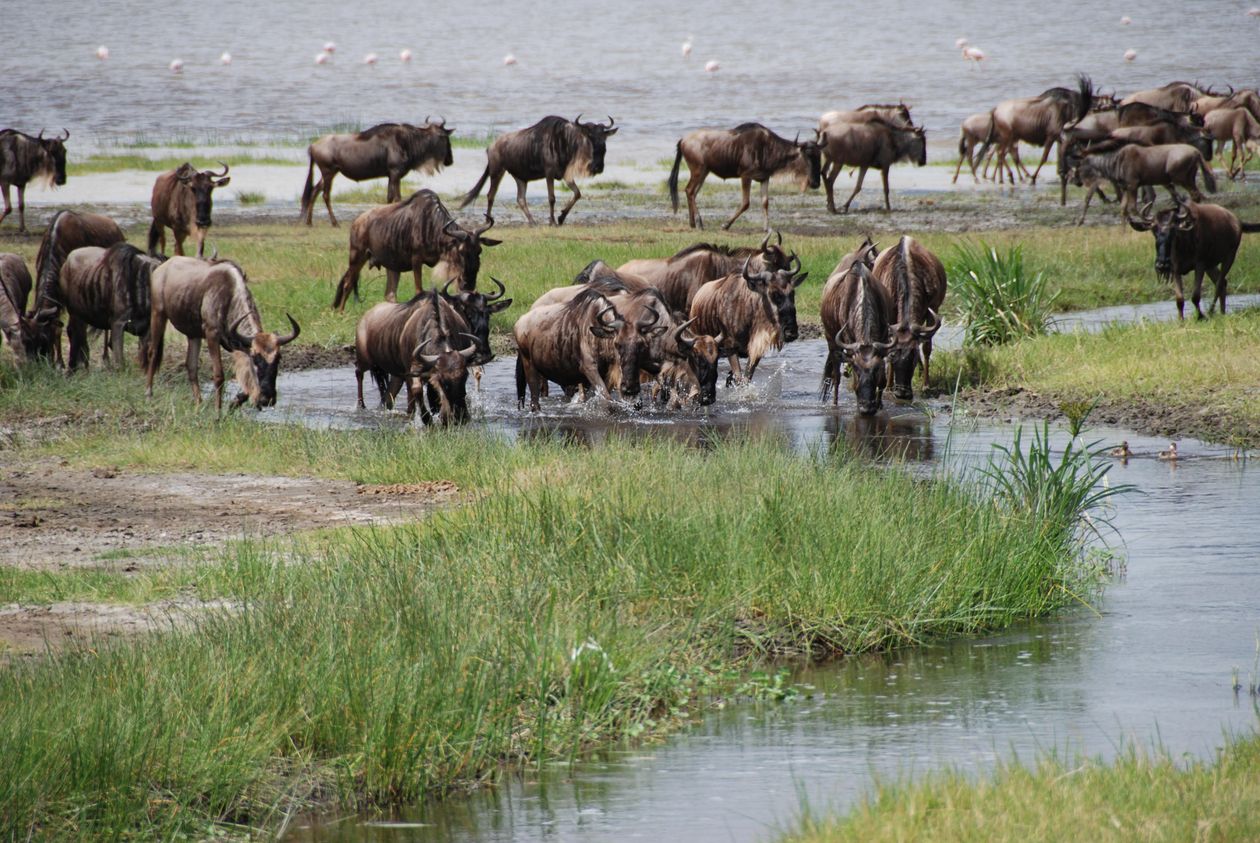
The main participants are wildebeest (also called gnu), which make up the bulk of the herds. Around 400,000 zebra travel with them, grazing differently and eating the taller, coarser grass first, which opens the pasture for the wildebeest behind them. About 200,000 Thomson's gazelle and 18,000 eland also move through the ecosystem. The total figure you will most often see quoted is 1.5 million animals. A 2025 Oxford University study using satellite imagery and AI analysis suggests the actual wildebeest population may be closer to 400,000 to 550,000, roughly half the traditional count. Whether older surveys were inflated or the population has genuinely changed is still being studied. Either way, when you see the herds on the northern Serengeti plains, the scale is staggering.
Predators follow the migration wherever it goes. Lions, leopards, cheetahs, hyenas, and wild dogs concentrate wherever the herds are dense. That is part of what makes every phase of the migration rewarding for wildlife viewing, not just the river crossings.
Great Migration Calendar: Where the Herds Are Each Month
Exact timing shifts by two to four weeks from year to year depending on rainfall, so treat the calendar below as a typical pattern rather than fixed dates. Use it for planning, then check with your camp closer to travel to confirm current herd positions. For a full look at weather and wildlife across all of Tanzania's parks, our best time to visit Tanzania for safari guide covers every month in detail.
| Month | Location | What's Happening |
|---|---|---|
| January | Southern Serengeti (Ndutu, short-grass plains) | Herds concentrate on fresh calving grounds; calving begins late in the month |
| February | Southern Serengeti (Ndutu area) | Peak calving: around 8,000 calves born per day; intense predator activity |
| March | Southern plains, moving northwest | Calving winds down; long rains begin; herds become restless |
| April | Central/Western Serengeti | Westward movement during heavy rains; far fewer tourists, lower prices |
| May | Western Corridor | Grumeti River crossings begin; mating season (rut) adds drama |
| June | Northern Serengeti | Herds gather near the Mara River; early crossings possible |
| July | Northern Serengeti, Mara River | Peak crossing season begins; herds push hard toward the river |
| August | Northern Serengeti/Masai Mara border | Most dramatic crossing month; thousands of animals attempt the river repeatedly |
| September | Northern Serengeti and into Kenya | Crossings continue; some herds have entered the Masai Mara |
| October | Northern Serengeti, beginning return south | Late dry season; herds begin filtering back; second crossing wave |
| November | Eastern Serengeti, heading south | Short rains start; southward trek begins; dispersal across the plains |
| December | Southern Serengeti approach | Herds return to calving grounds; cycle completes |
Calving season (January through March) is consistently underrated by travelers who fixate on river crossings. The Ndutu area of the southern Serengeti is blanketed in newborn wildebeest during February, and predators including lions, cheetahs, wild dogs, and hyenas are working constantly. It is raw, unrelenting wildlife drama across flat, short-grass plains with near-perfect visibility. Accommodation is also less expensive and far easier to book than northern camps in August.
The River Crossings: What Actually Happens
River crossings are the defining image of the Great Migration, and the Mara River in the northern Serengeti is where the most dramatic ones occur. Here is what you need to know before you go.
Grumeti River (May to June)
As the herds move through the Western Corridor in May and June, they cross the Grumeti River. These crossings are smaller in scale than the Mara crossings, but the Grumeti is home to enormous Nile crocodiles that have waited all year for this moment. The drama is real, and it happens with far fewer tourists. If you want crossing action without the peak-season crowds and prices, the Grumeti area in late May or June is worth serious consideration.
Mara River (July to October)
The Mara River crossings in the northern Serengeti are what most visitors have in mind when they book a migration safari. From July through October, tens of thousands of wildebeest push toward the river, halt, retreat, then surge forward again. The hesitation is not timid behavior: it is a genuine read of the crocodiles, current, and the drop into the water on the far side. When the herds finally commit, it happens in minutes: thousands of animals plunge in at once, swimming hard, hauling themselves up slippery banks while crocodiles pick off the slower ones. You can return to the same crossing point several days running and see it play out differently every time.
The critical thing to understand: crossings are not guaranteed. Herds can sit on the northern bank for four or five days before attempting the water. They can cross and then cross back within the same day. River levels, the behavior of the lead animals, predator pressure, and upstream rainfall all affect timing. Plan a minimum of three nights at a northern Serengeti camp if witnessing a crossing is a priority. Five to seven nights gives you a much higher probability.
Where to Stay for the Best Migration Viewing
Location matters enormously for a migration safari. Staying in the right zone for the right month is the single biggest factor in what you actually see. For a broader look at how the Serengeti compares to the other parks in Tanzania's northern circuit, our Serengeti vs. Ngorongoro Crater guide covers the key trade-offs.
Northern Serengeti (July to October)
The northern zone around Kogatende and the Lamai Triangle gives you direct access to the Mara River crossing points. Premium mobile camps in this area typically cost $600 to $1,500 per person per night, and the best-positioned properties book nine to twelve months in advance. A handful of more affordable seasonal camps run $300 to $600 per person per night. If the river crossings are your main goal, book as early as you can.
Southern Serengeti and Ndutu (January to March)
The Ndutu area sits at the junction of the Serengeti and the Ngorongoro Conservation Area, which is exactly where the herds calve. Seasonal tented camps here run $300 to $600 per person per night and are far easier to book than the northern camps. The flat, open terrain delivers exceptional visibility, and predator density during calving is among the highest you will find anywhere in Africa.
Central Serengeti (Year-Round)
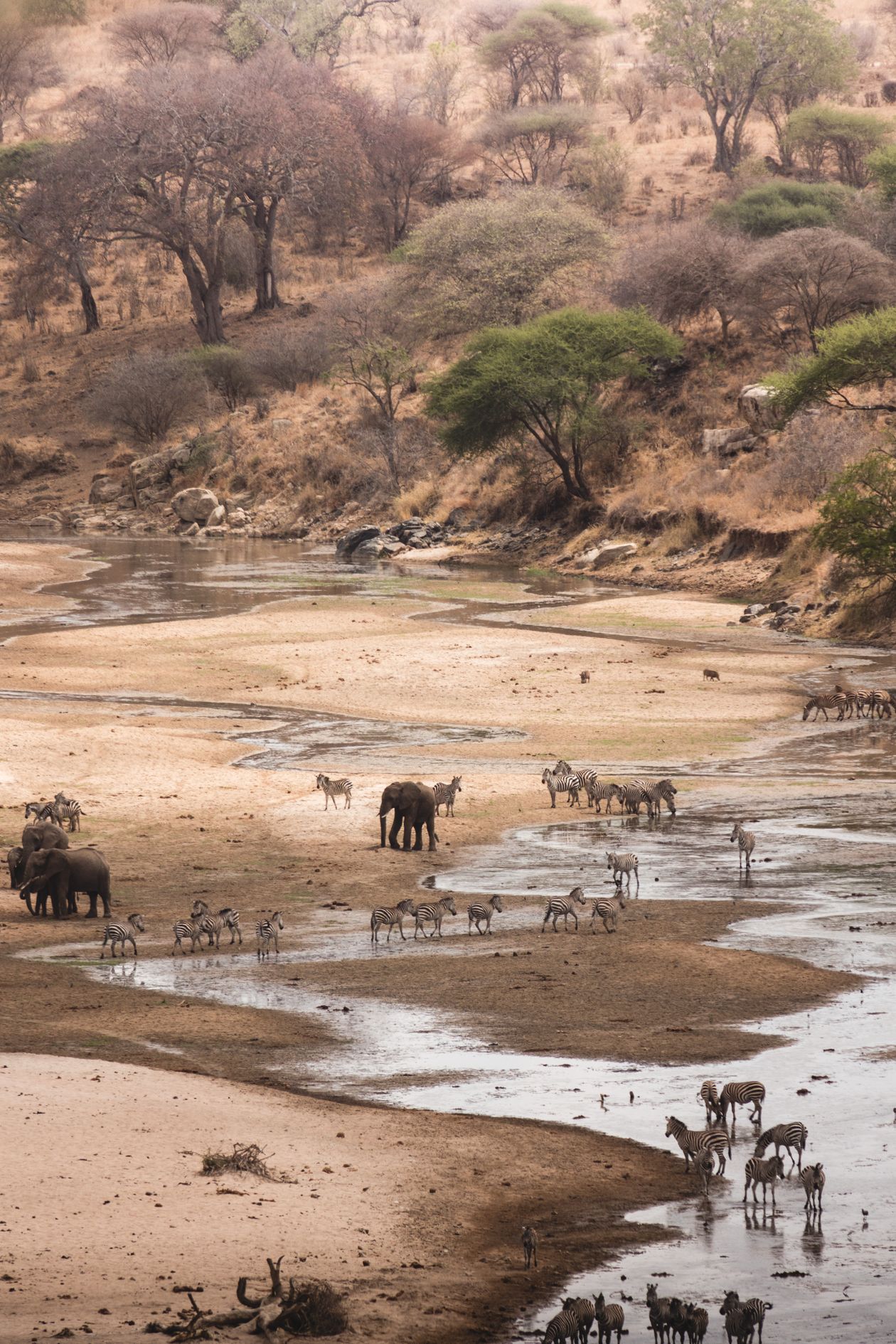
The Seronera area in the center of the park has permanent lodges open year-round at $200 to $400 per person per night. Resident wildlife here is excellent regardless of migration timing. Migration herds pass through in transit during April, June, October, and November, so you can catch herd activity without paying northern prices if you time it right.
Western Corridor (May to June)
Mobile camps in the Western Corridor operate from May through June to coincide with the Grumeti crossings. Prices are similar to the northern Serengeti ($500 to $1,200 per person per night), but the camps are smaller and the experience is noticeably more remote. The landscape here is different too: more woodland and granite kopjes instead of open plains.
How Many Days Do You Need to See the Migration?
Five to seven days in the right location gives you a good chance at every phase you are targeting. For river crossings specifically, plan a minimum of three nights at a northern Serengeti camp, though five nights is more realistic if this is a genuine priority. Shorter stays are possible, but you are taking on real unpredictability risk.
Most visitors combine a migration stop with other parks. A Tanzania safari of six to eight days total can include two to three nights in the northern Serengeti for crossings plus time in Ngorongoro Crater or Tarangire, enough for a full northern circuit rather than a single-focus migration trip. If you want to build that route, our 6-day Tanzania safari itinerary lays out a practical schedule.
Practical Planning: Booking, Budget, and What to Expect
A migration-focused Tanzania safari requires more advance planning than a general northern circuit trip, especially if you are targeting the river crossings in July through September.
When to Book
Book nine to twelve months in advance for northern Serengeti camps in July and August. The premium mobile camps in Kogatende and the Lamai Triangle fill faster than almost any other accommodation category in East Africa. Calving season camps at Ndutu are more flexible: six months is generally enough, though popular properties fill earlier. Green season camps in April and May are the easiest to book and often offer reduced rates.
What It Costs
Migration safaris sit at the higher end of the Tanzania price range. Peak season pushes accommodation rates up, and the northern Serengeti runs almost exclusively on permanent or mobile luxury camps. As a rough guide: $300 to $600 per person per night for solid tented camps in migration zones, and $600 to $1,500 per person per night for premium riverfront mobile camps. Serengeti park fees run around $70 per person per day; most all-inclusive camps fold that into the nightly rate. Flying from Arusha to the northern Serengeti by charter typically adds $400 to $600 per person return, but saves four to five hours of driving each way.
Set Realistic Expectations
Any operator that guarantees a river crossing is overpromising. The migration is wildlife-driven and weather-dependent. What is certain: you will be in one of the most wildlife-dense environments on the planet, with expert guides and the best odds of extraordinary sightings available anywhere. That has real value even on a day when the herds sit quietly on the far bank and do not move.
What to Bring
Bring binoculars (10x42 is a solid all-round choice), a camera with a telephoto lens if photography matters to you, and layers. Mornings on the northern Serengeti plains are genuinely cold from June through August; start with fleece or a light down layer. By mid-morning it can warm to t-shirt temperatures, and afternoons before a storm drop back again. Pack neutral colors: bright clothing stands out against the savanna and can affect animal behavior at close range.
Frequently Asked Questions About the Great Migration
Does the Great Migration happen in Tanzania or Kenya?
Both. The migration runs through a single connected ecosystem, but about nine months of the year-round cycle take place inside Tanzania (the Serengeti). The herds push into Kenya's Masai Mara from roughly August through October, then return south. Tanzania is the primary destination for most of the annual cycle, including calving season and the early crossing season.
What is the best month to see the Mara River crossings?
August is consistently the most active month for Mara River crossings in the northern Serengeti. July and September are also excellent. The herds are present and pushing, the river is at a crossable level, and crocodile activity peaks. August is also the most crowded and expensive month; if you want slightly fewer people with similar wildlife action, early July or late September are worth considering.
Are river crossings guaranteed?
No. River crossings depend on where the herds are, how the lead animals read the water, river levels, and predator pressure on both banks. You can spend a week at a Mara River camp and see multiple crossings daily, or you can spend three nights watching the herds hesitate and retreat. Plan for at least three to five nights in the northern Serengeti to give yourself a genuine chance, and treat every day without a crossing as still outstanding wildlife viewing.
How much does a Great Migration safari cost?
Expect $300 to $600 per person per night for good tented camps in or near migration zones, and $600 to $1,500 per person per night for premium riverfront mobile camps in the northern Serengeti during peak season. Most rates are all-inclusive: accommodation, meals, twice-daily game drives, and park fees. A seven-night migration safari at a mid-range camp runs roughly $2,100 to $4,200 per person before international flights.
How far in advance should I book a northern Serengeti camp?
Nine to twelve months ahead for July and August at the best-positioned mobile camps. The Lamai Triangle and Kogatende camps with direct Mara River access fill the fastest. With less lead time, work with a specialist who can check cancellation availability, or look at camps slightly farther from the river that still offer crossing excursions by vehicle.
Is calving season worth visiting if I can't make the river crossings?
Yes. Calving season (January through March) in the southern Serengeti and Ndutu area is one of the most wildlife-intense experiences in Africa. Around 500,000 calves are born over the course of the season, and predators are active, well-fed, and easy to find. The herds are enormous, the landscape is open, and accommodation is less expensive and easier to book than northern camps during peak season.
Can I see the migration without flying to the northern Serengeti?
Yes. Calving season in the southern Serengeti is accessible from the main Seronera area by road, and central Serengeti camps see migrating herds in transit in April, June, October, and November. The Grumeti crossings in the Western Corridor (May to June) are also driveable from Seronera. The most dramatic Mara River crossings require reaching the northern Serengeti, most practically by charter flight from Arusha: around 45 minutes compared to three to four hours of road travel from Seronera each way.