
Tanzania is the stronger choice for most safari travelers: it has larger parks, fewer vehicles per square kilometer, the Great Migration for 9 to 10 months of the year, and a Zanzibar extension that's hard to beat. Kenya makes sense if you're working with a tighter budget, have fewer than 7 days, or want the best chance of seeing rhino up close. Both countries have the Big Five and exceptional wildlife. The question is which version of that experience fits your trip.
Tanzania vs. Kenya Safari: A Quick Comparison
| Factor | Tanzania | Kenya |
|---|---|---|
| Best for | Longer, immersive safari (8+ days) | Shorter, accessible safari (5 to 7 days) |
| Protected land | 38,000+ km² | 8,000+ km² |
| Migration duration | 9 to 10 months per year | 2 to 3 months (Jul to Oct) |
| Cost (6 days, mid-range) | $3,500 to $5,000 per person | $2,500 to $3,500 per person |
| Rhino sightings | Ngorongoro Crater (black rhino) | Ol Pejeta, Lake Nakuru (better odds) |
| Beach extension | Zanzibar (excellent) | Mombasa coast (good) |
| Self-drive | Guides required by law | Allowed in most parks |
| Visa cost | $50 + ~$44 new insurance fee | $34 eTA |
| Recommended length | 8+ days | 5 to 7 days |
The Core Difference: Scale and Accessibility
Tanzania is bigger, wilder, and more expensive. Kenya is easier to get into logistically and gentler on the budget. The difference becomes clear when you look at the numbers: the Serengeti alone covers 14,763 km², while Kenya's Maasai Mara covers around 1,510 km². That size difference means the same number of visitors spreads across a much larger area in Tanzania, which is why game drives in the Serengeti can feel genuinely remote even in peak season.
Kenya's base is Nairobi, one of Africa's major aviation hubs with direct routes from Europe, North America, and Asia. Tanzania's base is Arusha, well connected but usually requiring a connection through Nairobi, Doha, or Addis Ababa. Once in Tanzania, many itineraries also rely on internal bush flights, which typically cost $300 to $500 per segment and add meaningfully to the overall cost. The benefit is that you land directly at your camp instead of facing a long drive on rough roads.
Wildlife: What Each Country Does Best
Both countries have all the Big Five. The difference is in where each animal is most reliably seen and what the overall experience is like.
Tanzania has the largest mammal population in Africa. The Serengeti supports around 70 lions per 100 km² in some zones. Tarangire National Park is arguably the best place in East Africa to see large elephant herds, with groups of 200 or more animals gathering at waterholes during the dry season from June to October. Ngorongoro Crater, a 260 km² volcanic caldera, holds a self-contained ecosystem with lions, hyenas, elephants, zebra, wildebeest, and around 30 to 35 critically endangered black rhinos.
Kenya's Maasai Mara has one of the highest concentrations of big predators in Africa. Lion, leopard, cheetah, and wild dog can all be seen in a single day during peak season. If rhino is your priority, Kenya gives you better odds: Ol Pejeta Conservancy and Lake Nakuru offer consistently close encounters with both black and white rhino, something Tanzania's northern circuit doesn't reliably match.
The Great Migration: Tanzania Wins on Duration
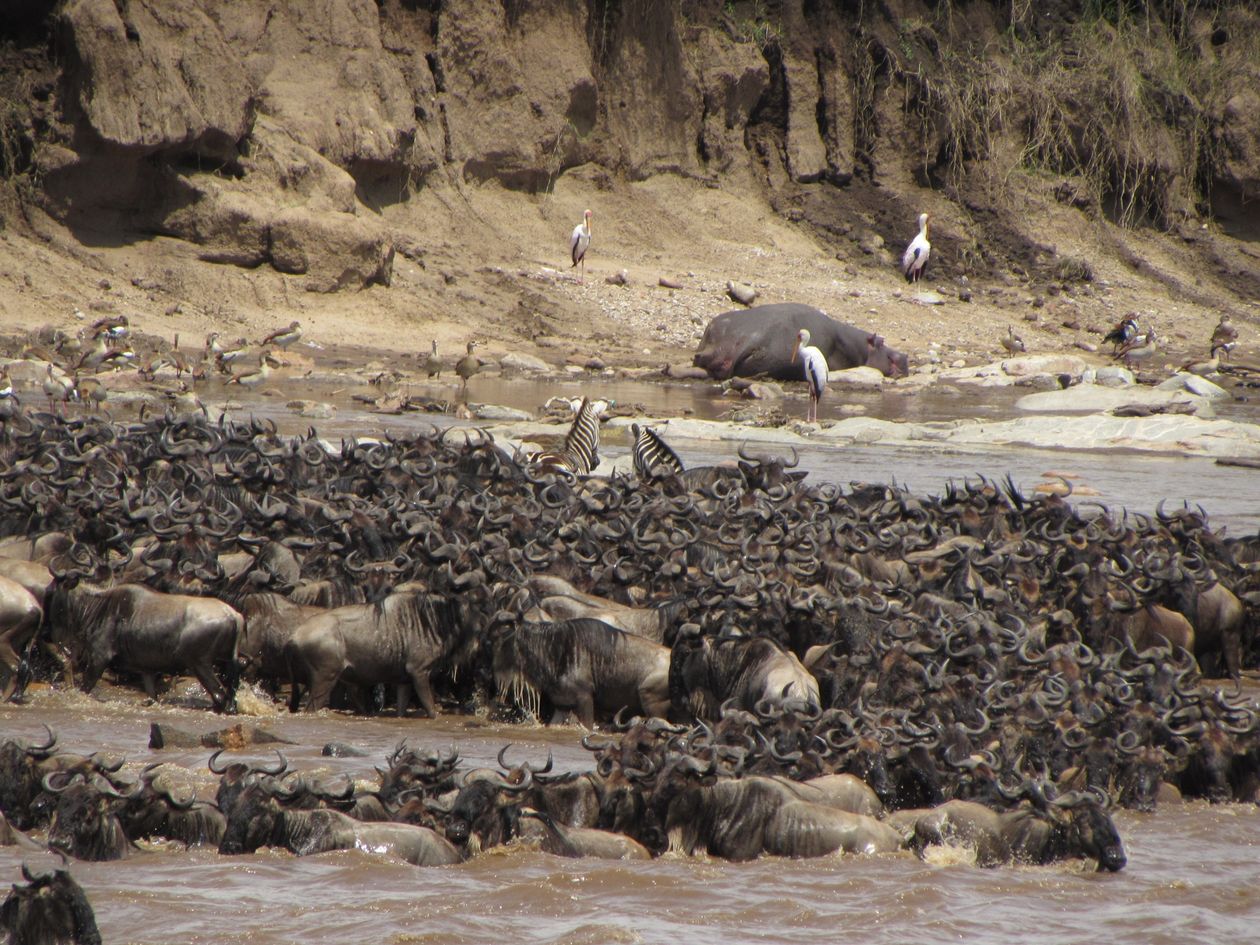
The Great Migration runs year-round, but for 9 to 10 months of the year, the herds are in Tanzania. Around 1.5 million wildebeest, 400,000 zebra, and 200,000 Thomson's gazelle complete a continuous clockwise loop through the Serengeti and into Kenya's Masai Mara. The most photographed moment, the Mara River crossings, happens at two locations: the northern Serengeti (Kogatende area) and the Masai Mara on the Kenyan side, both from July through October.
If you're booking specifically for river crossings, either country can deliver. The calving season, though, is Tanzania-only. From January through March, the herds are in the southern Serengeti and Ndutu area, where around half a million calves are born in a six-week window and predator activity reaches its highest intensity of the year. There is nothing comparable in Kenya at that time.
Here's where the migration is each month:
- January to March: Southern Serengeti and Ndutu, Tanzania. Calving season with intense predator activity.
- April to June: Central Serengeti and western corridor, Tanzania. Grumeti River crossings begin.
- July to October: Northern Serengeti and Masai Mara, spanning Tanzania and Kenya. Mara River crossings.
- November to December: Herds return south through the central Serengeti, Tanzania.
For a full breakdown of what to expect month by month, see our Serengeti Great Migration guide.
The Safari Parks: Northern Circuit vs. Kenya's Circuit
Tanzania's northern circuit is broader and takes longer to cover; Kenya's circuit is more compact and suits shorter trips. Here's what each country's main parks look like in practice.
Tanzania's northern circuit typically combines three or four parks over 7 to 10 days:
- Tarangire National Park: Best in the dry season for elephant concentrations and tree-climbing lions
- Lake Manyara National Park: Compact half-day park known for flamingos, tree-climbing lions, and large baboon troops
- Ngorongoro Crater: A self-contained wildlife ecosystem inside a volcanic caldera
- Serengeti National Park: The flagship destination; vast and varied with year-round wildlife
If you're trying to decide how to split your days between the Serengeti and Ngorongoro, our Serengeti vs. Ngorongoro Crater comparison covers the differences in detail.
Kenya's safari circuit is more compact, which is one reason it suits shorter trips. The main parks:
- Maasai Mara National Reserve: Kenya's flagship; outstanding predator sightings year-round
- Amboseli National Park: Famous for large elephant herds and views of Kilimanjaro on clear days
- Lake Nakuru: Reliable rhino, flamingo, and Rothschild's giraffe sightings
- Ol Pejeta Conservancy: The best place in East Africa for close rhino encounters; also has a chimpanzee sanctuary
A Kenya circuit combining the Mara, Amboseli, and Nakuru can be done in 5 to 6 days without internal flights, a practical advantage for travelers with limited time.
Park Fees: What You'll Actually Pay
Tanzania's park fees have multiple layers and add up faster than many travelers expect. For non-residents in 2026:
- Serengeti: approximately $82 per person per day, plus concession fees of $71 per person per night if staying inside the park
- Ngorongoro Conservation Area: $70 per person per day, plus $295 per vehicle if you descend to the crater floor
- VAT: 18% is added on top of all Tanzania park fees
Kenya's Maasai Mara fees vary sharply by season:
- January to June (low season): $100 per person per day
- July to December (peak season): $200 per person per day
That last figure is worth noting: the Mara's $200/day peak rate is higher than the Serengeti's flat rate. The cost gap between Tanzania and Kenya narrows considerably if you're visiting Kenya during July through October.
Total Safari Cost: What to Budget
For a 6-day mid-range safari with lodge or tented camp accommodation, full-board meals, and guided game drives, here's how the numbers compare per person sharing:
- Kenya: $2,500 to $3,500
- Tanzania: $3,500 to $5,000
Tanzania's higher cost comes from three factors: accommodation in remote locations costs more because of the logistics of supplying it; many itineraries require internal bush flights; and the multi-layer park fee structure adds up quickly. The premium buys less crowded parks, a much larger wilderness area, and ecosystems like the Ngorongoro Crater and the southern Serengeti calving grounds that have no direct equivalent in Kenya.
Budget safaris exist in both countries. The cheapest Tanzania options typically use camping and shared group vehicles, which changes the experience significantly. Kenya's parks are more accessible from Nairobi, making a genuine budget circuit more viable. For help thinking through how many days makes sense, see our Tanzania safari length guide.
Crowds: How Each Safari Feels
The Maasai Mara during peak migration, particularly August and September, is legitimately busy. It's not unusual to see 20 or more vehicles gathered around a lion kill or a river crossing. The wildlife is extraordinary, but the atmosphere can feel more like a busy national park than a remote wilderness experience.
Tanzania's Serengeti spreads visitors across an area roughly 10 times the size of the Mara. Even in peak months, game drives that feel genuinely remote are the norm rather than the exception. The private concession areas adjacent to the Serengeti and Ngorongoro have strict vehicle limits per sighting, making them more exclusive, though accommodation there sits at the higher end of the budget range.
Ngorongoro Crater is the exception within Tanzania. It's compact, very popular, and the crater floor can feel crowded, especially midday. Arriving at the gate when it opens and leaving before noon makes a real difference to the experience.
Beach Extensions: Zanzibar vs. the Kenya Coast
Tanzania has the clearer edge for a safari-and-beach combination. Zanzibar is a 45-minute flight from Arusha or a short hop from Dar es Salaam. The island has excellent beaches on the east and north coasts, a UNESCO-listed Stone Town, and a relaxed pace that pairs naturally with the end of a safari. Most Tanzania operators can package the combination into one itinerary.
Kenya has Mombasa and the Lamu Archipelago, both worth visiting in their own right. Mombasa is a short flight from Nairobi, but the beach scene there is more resort-heavy and less distinctive than Zanzibar. Lamu is beautiful but logistically more involved. If a bush-and-beach trip is the goal, Tanzania is the easier and more rewarding choice.
Visas and Getting There
Both countries have online application systems, and neither requires an embassy visit for most nationalities.
Kenya replaced its visa system in January 2024 with an Electronic Travel Authorization (eTA), which costs $34 and takes around three working days to process. It covers most nationalities and is straightforward to apply for.
Tanzania issues a single-entry tourist e-visa for $50 or a multi-entry visa for $100. Tanzania has also announced a mandatory travel insurance fee of approximately $44 per international visitor, expected to take full effect in the 2025 to 2026 fiscal year. Factor this in when comparing entry costs between the two countries.
If you plan to visit both countries, the East Africa Tourist Visa covers Tanzania, Kenya, Uganda, and Rwanda for $100, which is better value than two separate applications for a combined itinerary.
Self-Drive vs. Guided Safari: A Practical Difference
In Kenya, self-drive safari is legal and reasonably common. You can rent a 4WD in Nairobi, drive to the Maasai Mara, and do your own game drives. There's a functioning budget-traveler safari culture in Kenya that simply doesn't exist in Tanzania.
In Tanzania, guides are required by law inside the national parks. You cannot self-drive in the Serengeti or Ngorongoro Crater. Every Tanzania safari involves hiring a licensed guide, which adds cost but also substantially improves the experience. A good guide reads animal behavior, knows where herds have been moving, and can spot things most self-drivers would miss entirely: a leopard in a tree, a cheetah crouched in long grass.
Who Should Choose Tanzania (and Who Should Pick Kenya)
Here's a practical framework for making the decision based on what matters most to you.
Choose Tanzania if:
- You have 8 or more days and want an immersive, remote-feeling safari
- You want to see the Great Migration across its full range, or specifically want the calving season in January to March
- A Zanzibar beach extension is part of your plan
- You want to cover Serengeti, Ngorongoro, and Tarangire as the headline parks
- You're willing to spend more for a wider, less crowded wilderness
Choose Kenya if:
- You have 5 to 7 days and want an efficient, well-connected first safari
- Rhino is a priority and you want the best chance of a close sighting at Ol Pejeta or Lake Nakuru
- Budget is a significant factor and you want to keep overall costs down
- You want to see Mara River crossings without committing to a full Tanzania circuit
- You'd like the option to self-drive part of the trip
Consider combining both if:
- You have 12 or more days
- River crossings are the primary goal and you want to see them from both sides
- You've already done one country and want to compare the experience directly
Frequently Asked Questions
Is Tanzania or Kenya better for a first safari?
Tanzania is the stronger first choice if you have 8 or more days and the budget allows. The combination of the Serengeti, Ngorongoro Crater, and Tarangire delivers a more complete and immersive introduction than any single Kenya circuit. If you're working with 5 to 7 days or a tighter budget, Kenya's Maasai Mara is an excellent entry point with easier logistics and lower overall cost.
Which has better wildlife: Tanzania or Kenya?
Tanzania has more wildlife by raw numbers and species diversity, with the largest mammal population in Africa. Kenya's Maasai Mara has some of the highest big-predator density on the continent. For the Great Migration, Tanzania wins on duration: 9 to 10 months per year versus Kenya's 2 to 3 months. For rhino, Kenya gives you better odds of a close sighting.
How much more expensive is Tanzania than Kenya?
A mid-range 6-day Tanzania safari typically costs $3,500 to $5,000 per person sharing, versus $2,500 to $3,500 for an equivalent Kenya trip, which is roughly 20 to 30% more. The difference comes from higher park fees, the cost of internal bush flights, and more expensive remote lodge accommodation.
Can you do Tanzania and Kenya on the same trip?
Yes, and many visitors do. A common route is 6 to 7 days in Tanzania's northern circuit followed by 3 to 4 days in the Maasai Mara, or the reverse. The East Africa Tourist Visa ($100) covers both countries without separate applications. Allow at least 12 to 14 days total for a combined trip that doesn't feel rushed.
When is the best time to visit each country for the Great Migration?
For Mara River crossings, both Tanzania's northern Serengeti and Kenya's Masai Mara deliver from July through October. For the calving season, January through March in Tanzania's southern Serengeti is the window and this phase has no equivalent in Kenya. For the widest access to the migration across the year, Tanzania wins by a long way. For more detail, our best time to visit Tanzania guide covers each month.
Does Tanzania require a guide, or can you self-drive?
Guides are required by law in Tanzania's national parks, including the Serengeti and Ngorongoro Conservation Area. Self-drive is not permitted in these parks. Kenya allows self-drive in the Maasai Mara and most other parks, which gives budget and independent travelers a viable option that Tanzania doesn't provide.
Is one country safer than the other for tourists?
Both countries are generally safe in the safari areas visited by tourists. Tanzania's northern circuit (Serengeti, Ngorongoro, Tarangire) is well away from the areas named in the US State Department's Level 3 advisory, which are concentrated near the Mozambique border in the south. Kenya has its own regional advisories. Check your government's current travel advice before booking and follow your operator's guidance on the ground.